Case study · Medical AI governance · Gallbladder Surgeon Abu Dhabi

The workflow became simpler. The clinical responsibility did not.

For Gallbladder Surgeon Abu Dhabi, I evolved an orchestration-heavy article pipeline into a Direct method built around a single principal drafting step. The orchestration became simpler, but the source evidence, structured claims, deterministic checks and human review remained. Every article still stops for my clinical, editorial and rendered-page review before publication is separately authorized.

16 English articles
at the verified 17 August 2026 repository snapshot
Five recorded approval gates
in the representative article record
Three retained correction cycles
preserved together with their rejections
One explicit control boundary
generation stops at human-review-ready
The Original Workflow

A governed pipeline that worked—and accumulated operational complexity

Medical content written for patients needs stronger governance than ordinary web copy. The original system took that seriously. It separated topic selection and page boundaries, research retrieval through sanctioned adapters, a stored source set, a structured claims table and its approval, an article brief and its approval, generation, deterministic validation and schema checks, automated QA, clinical review, editorial review, rendered-preview review, compilation and build checks, publication authorization, and repository integration with deployment and live-route verification.

That system was not a failure. It produced the standards, validators, compiler and contracts that the current method still relies on. What follows is evolution through learning, not a bad system replaced by a good one.

Project facts

Operational Complexity

Where operational complexity accumulated

INFERRED — an interpretation of the retained evidence, not a confirmed causal finding

The retained evidence supports an inference that much of the operational burden arose in coordination between stages, state and working copies rather than in drafting alone.

There is no measured claim here about time, cost, productivity or defect rate. The retained evidence does not establish one.

The Direct Method

A single AI drafting step, inside a governed sequence

“One-shot” describes the operating design for the principal article-generation step. It does not mean that one prompt publishes an article, and retained logs do not prove that every historical article used exactly one model call.

The system stops at HUMAN REVIEW READY. Publication is a later, separately authorized action.

  1. Topic and page-boundary selection

    Assisted preparation

  2. Evidence retrieval through existing research adapters

    Technical support

  3. Stored source set, structured claims table and article brief

    Retained evidence artifacts

  4. One principal article-generation call

    Operating design

    One principal generation call is the operating design. Per-run invocation logs were not retained, so this is not a verified per-run count.

  5. Deterministic validators, schema checks, compiler and build checks

    Technical controls

  6. Claims and evidence-sufficiency review

    Human clinical control

  7. Finished clinical content and medical-illustration review

    Human clinical control

  8. Editorial-quality and rendered-preview review

    Human review

  9. Bounded correction where required, or explicit publication authorization

    Human decision

  10. Repository integration and deployment

    Technical stage, after authorization

    A private GitHub repository publishes through Cloudflare Pages.

  11. Recorded live-route verification

    Technical stage

Steps 6 to 9 are the explicit human clinical, editorial and publication decisions. Steps 10 and 11 are separate controlled technical stages that happen only after publication authorization.

Controls

Which controls remained

Human controls

  • Topic and clinical-boundary selection
  • Review of evidence and claims at the clinical gate
  • Article-brief approval
  • Clinical review of the finished patient-facing article
  • Medical-illustration review for anatomy, laterality and framing
  • Editorial and rendered-preview review
  • Rejection and bounded correction requests
  • Explicit publication authorization

Technical controls

  • Research retrieval and stored source sets
  • Structured claims table and article brief as retained artifacts
  • Deterministic validators and schema checks
  • Compiler and build checks
  • Fail-closed validation as a retained design property
  • Article-scoped repository integration
  • Controlled deployment sequence
  • Recorded live-route verification
  • Indexing control

What the retained evidence does not establish

  • Per-row claims-table approval was not maintained in the deeply audited article, although gate-level claims approval was recorded.
  • No current-lane automated-QA adjudication artifact was recovered.
  • Fail-closed behaviour is a retained design property, but no Direct-lane failure instance was recovered.
  • The retained evidence does not identify the operator of repository integration, deployment or live-route verification.

Orchestration stages were consolidated. The clinician’s review now makes the substantive judgement in the places where automated checks cannot establish medical meaning.

Clinical Review

What clinical review caught

Three correction cycles survive with both the rejected and the approved versions retained. Keeping the rejections is what makes these inspectable at all.

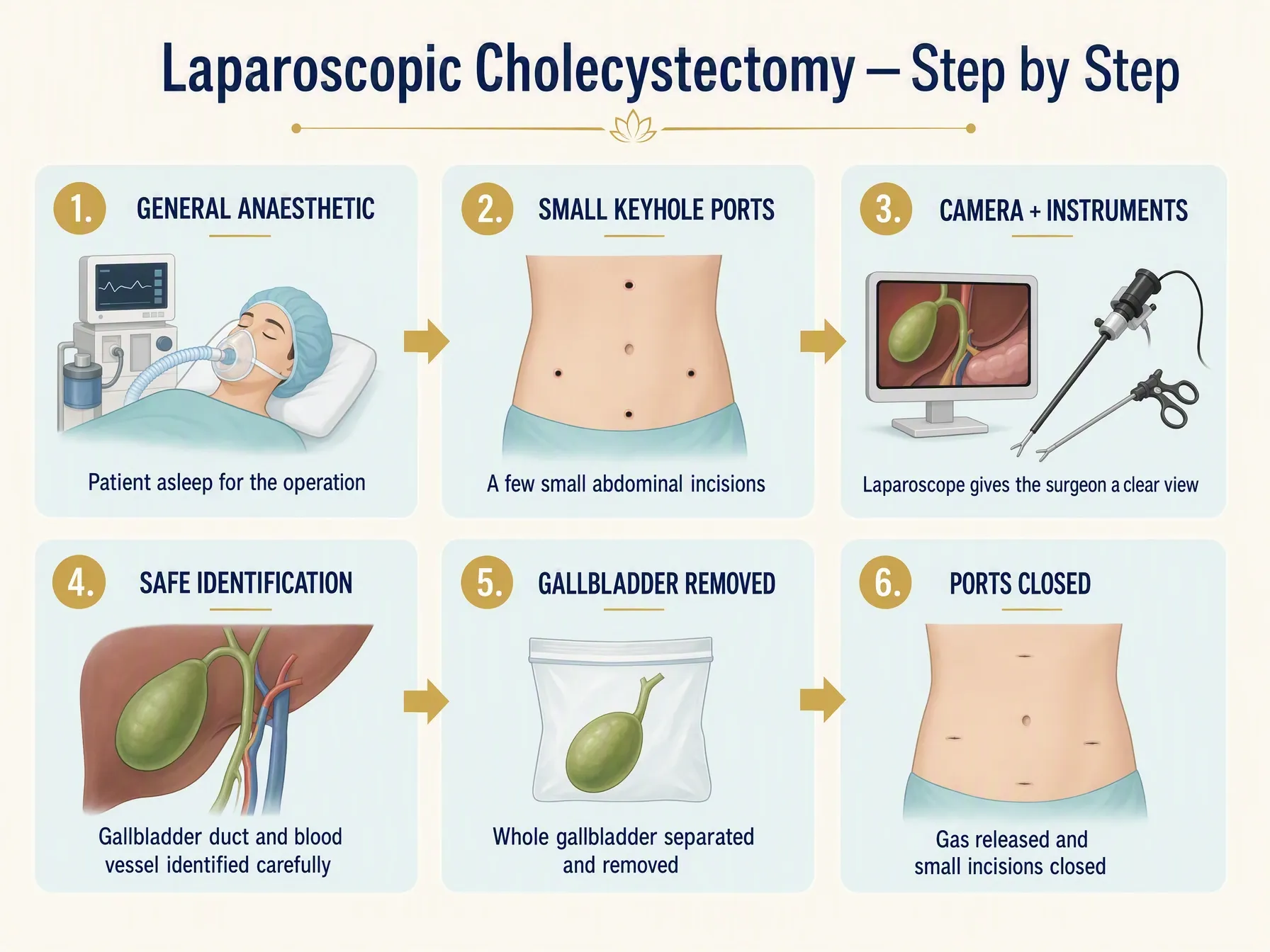
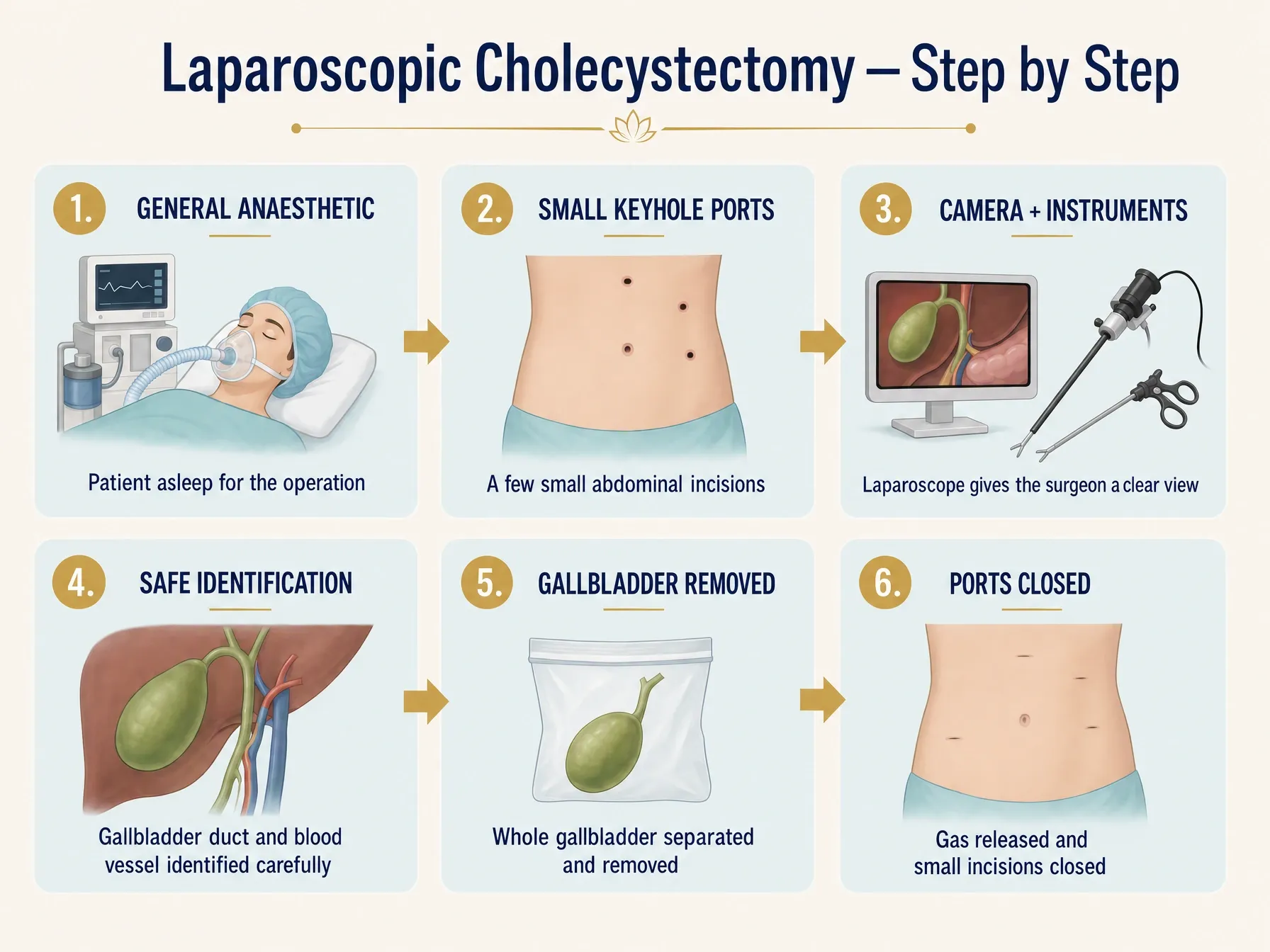
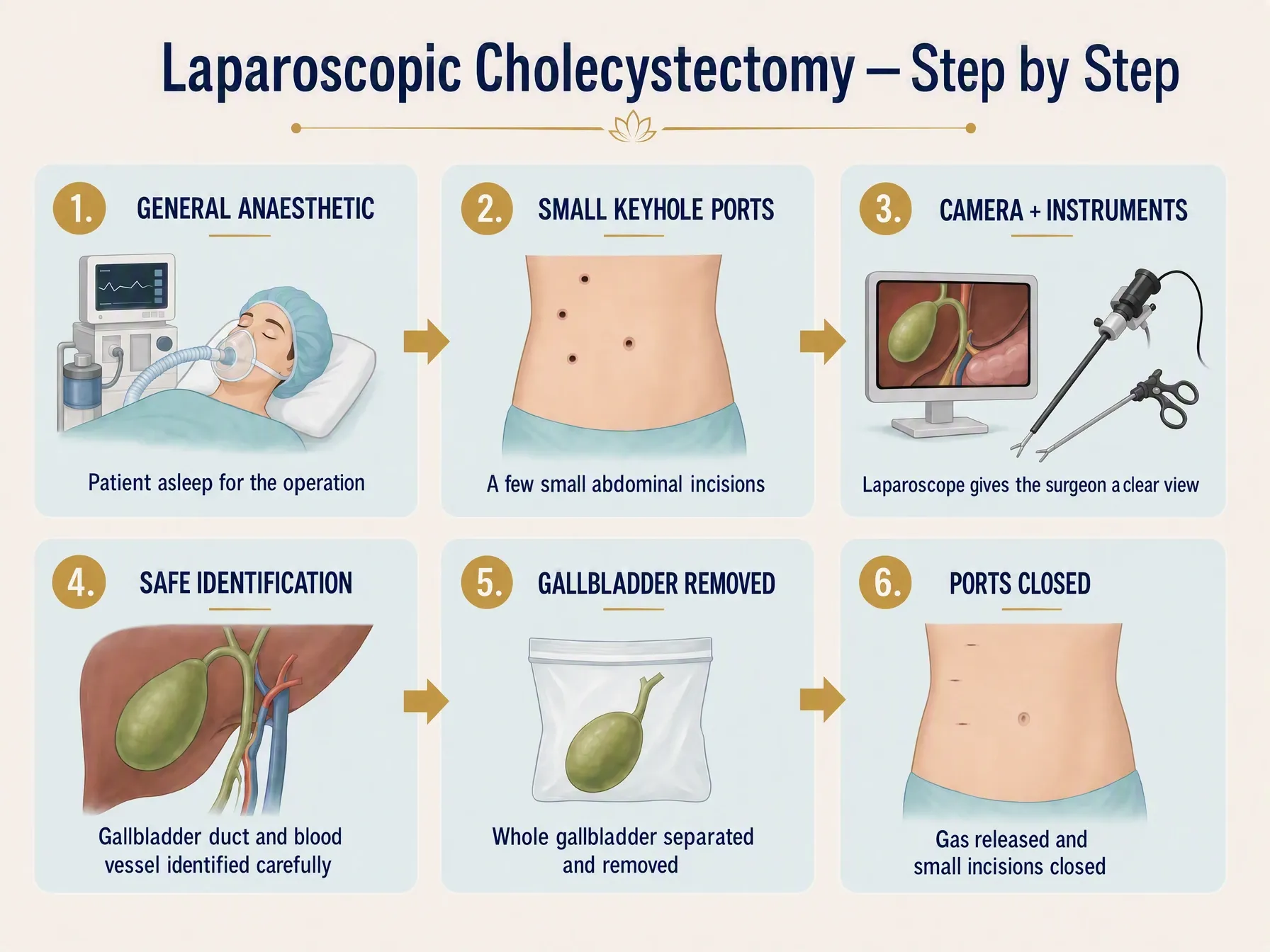
Laparoscopic port placement

Laparoscopic Cholecystectomy — Step-by-Step, Risks & Recovery · commit 9a3b1c9 · approved 16 August 2026

For the project’s intended standard four-port illustration, the ports needed to appear around the navel and across the upper and patient’s right abdomen. The first illustration placed a keyhole port on the patient’s left lower abdomen. The first correction moved the ports upward but left them on the patient’s left, so I rejected it again. The second correction placed the ports on the midline and the patient’s right, leaving the patient’s left clear. That version was approved and published.

The first correction was rejected as well. Review here was not a final tick.

  1. REJECTED

    Superseded illustration: a keyhole port drawn on the patient’s left lower abdomen.

    First illustration — a port on the patient’s left lower abdomen.

    Open larger image — rejected illustration
  2. REJECTED AGAIN

    Superseded first correction: ports moved upward but still on the patient’s left side.

    First correction — ports moved upward, still on the patient’s left.

    Open larger image — rejected again illustration
  3. APPROVED

    Approved illustration: ports on the midline and the patient’s right, with the patient’s left clear.

    Second correction — ports on the midline and patient’s right. Approved and published.

    Open larger image — approved illustration
Educational medical illustrations, not patient images. Project-generated working artifacts included in an owner-authorized public case-study display.

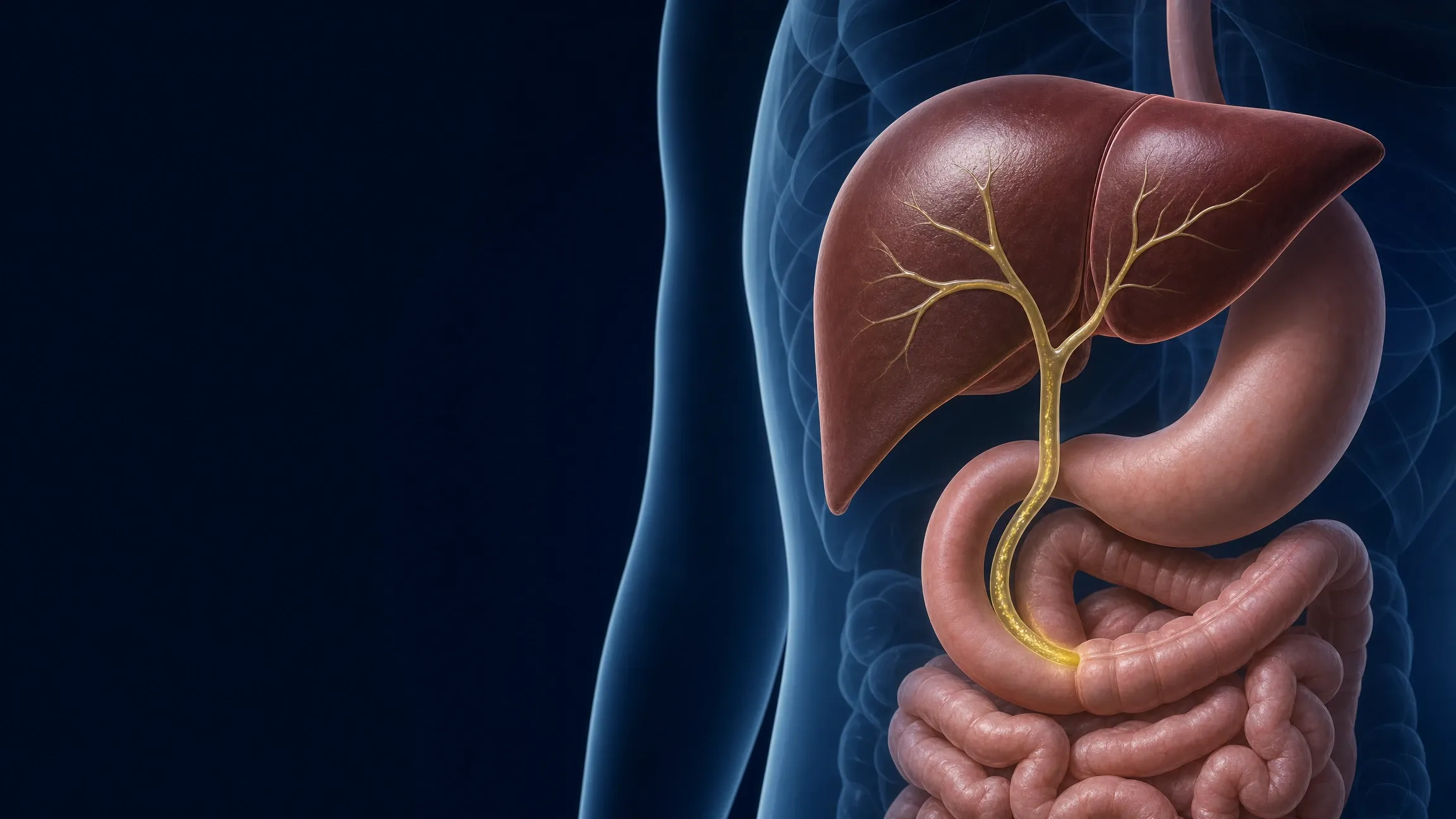
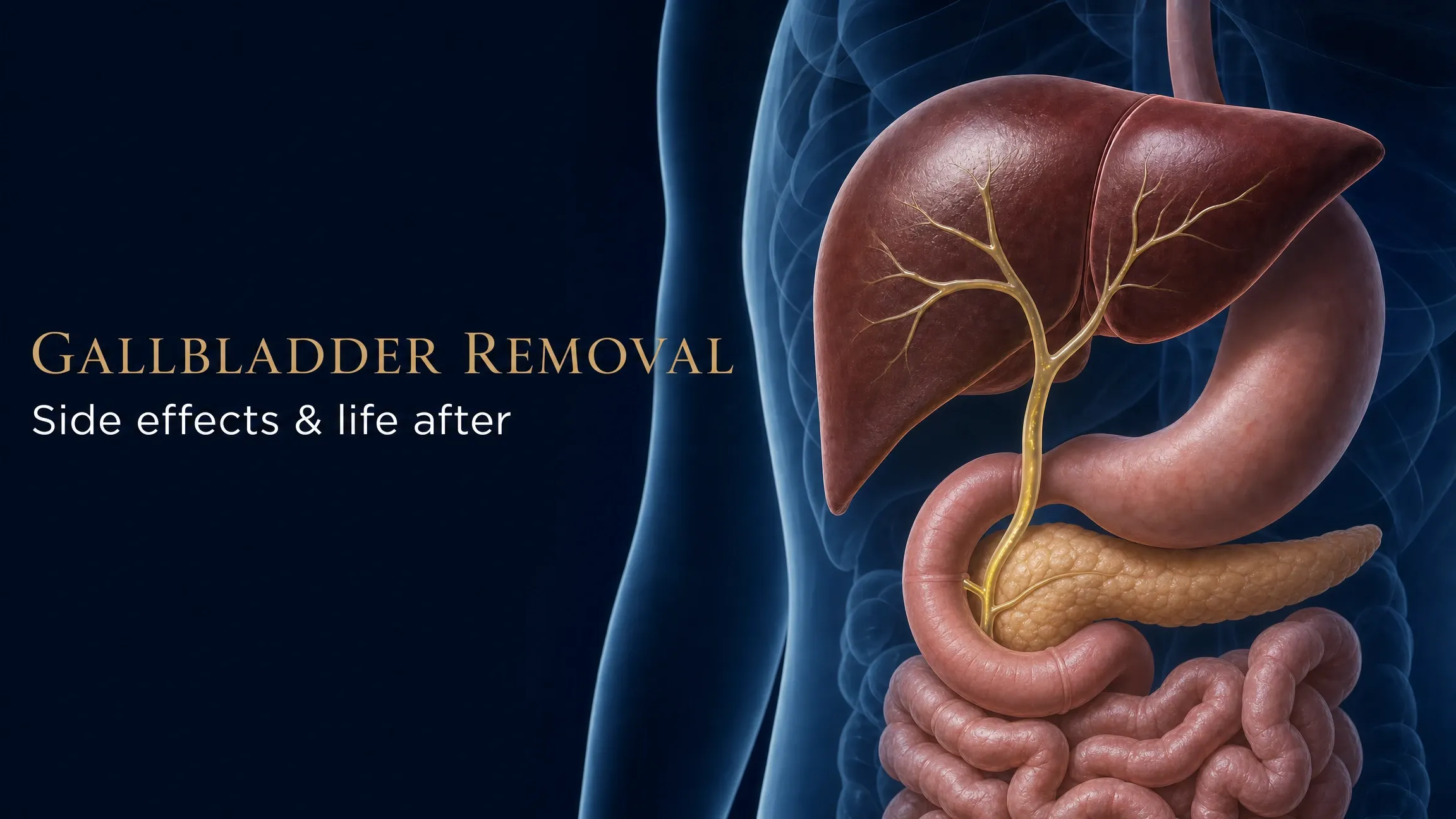
Biliary anatomy after gallbladder removal

Gallbladder Removal Side Effects — What to Expect Short & Long-Term · commit ab04064 · approved 16 August 2026

The featured illustration for this article routed the common bile duct to a distal bowel loop, and the pancreas was missing. The corrected version routes the duct into the duodenal C-loop at the pancreatic head, adds the pancreas, and keeps the gallbladder correctly absent — which is the whole point of an illustration about life after gallbladder removal.

  1. SUPERSEDED

    Superseded featured illustration: the common bile duct routed to a distal bowel loop, with no pancreas shown.

    Superseded — duct routed to a distal bowel loop, pancreas absent.

    Open larger image — superseded illustration
  2. APPROVED

    Approved featured illustration: the common bile duct joining the duodenal C-loop at the pancreatic head, pancreas present, gallbladder absent.

    Approved — duct into the duodenal C-loop, pancreas present, gallbladder correctly absent.

    Open larger image — approved illustration
This is the featured biliary-anatomy illustration for the article. A separate, uncorrected figure published with the same article carries “bile-flow” in its filename and is not the asset shown here. Educational medical illustrations, not patient images. Project-generated working artifacts included in an owner-authorized public case-study display.

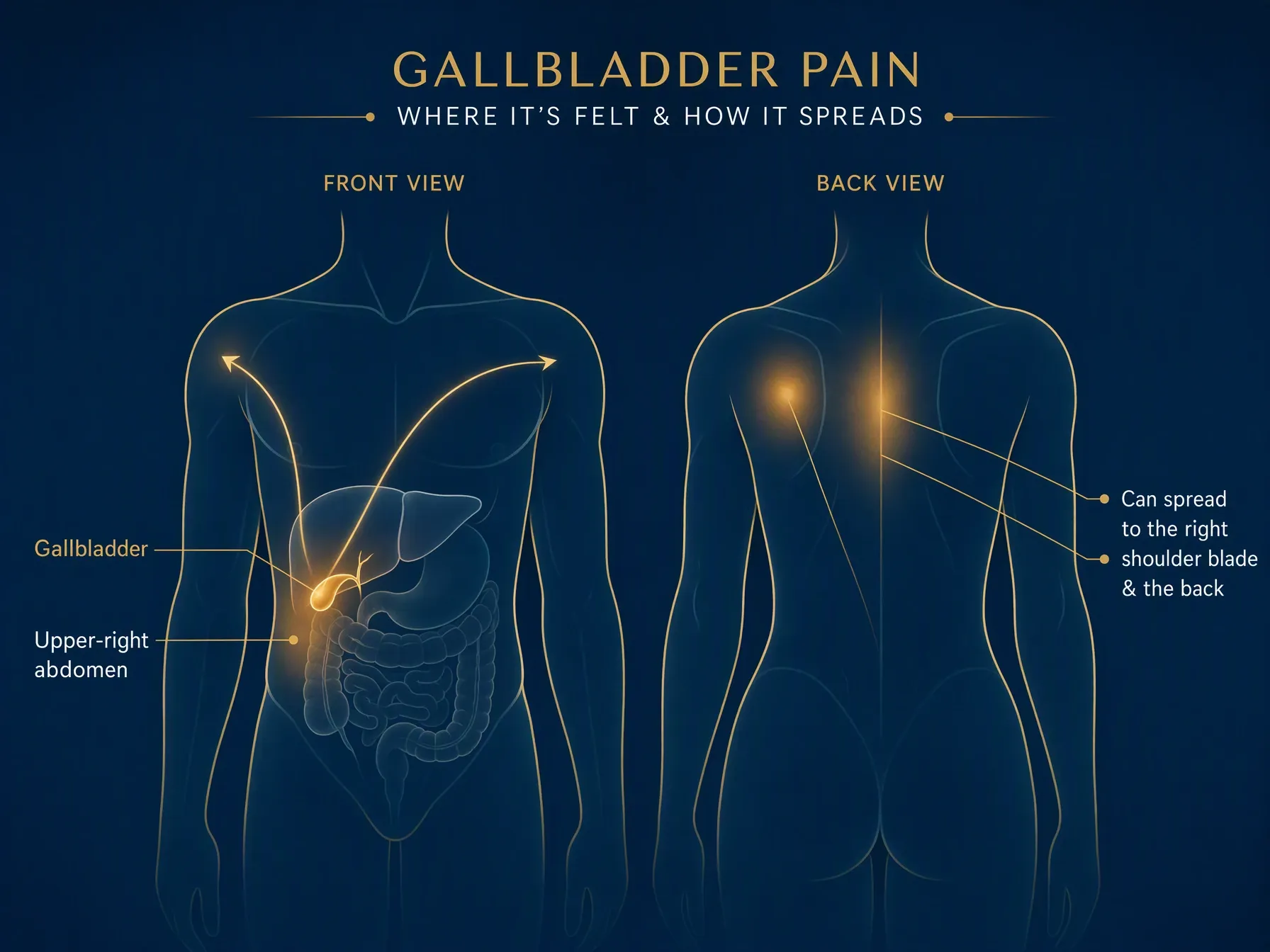
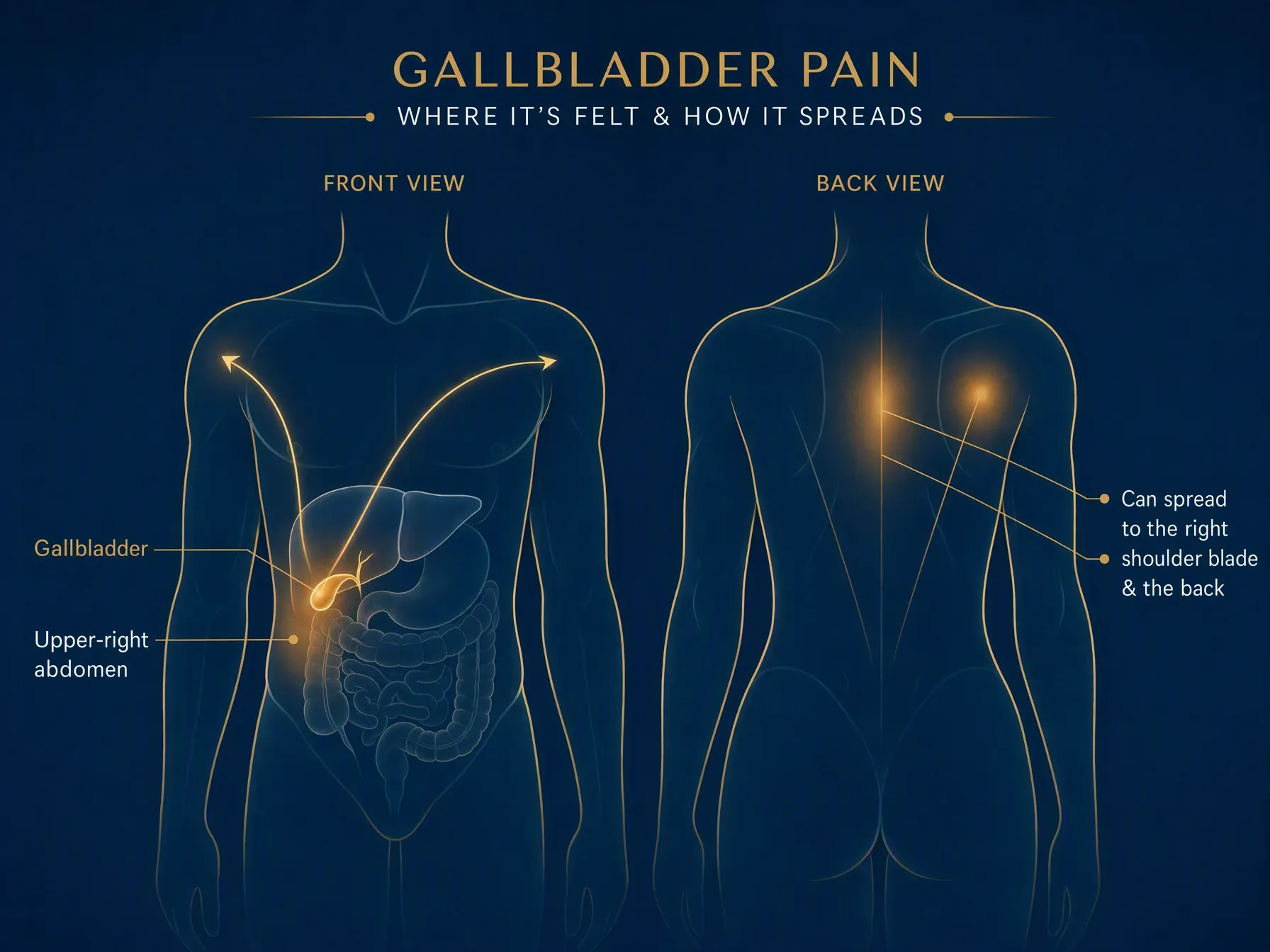
Pain-location laterality

Where Is Gallbladder Pain Felt? · figure commit f53b14d · approved 16 August 2026

In the back view, the shoulder-blade pain marker sat on the patient’s left while the figure’s own label read “right shoulder blade”. The corrected image moved the marker to the patient’s right and left the rest of the figure unchanged. The same reviewer record shows two rival candidates for this figure were rejected outright for pointing pain radiation at the patient’s left shoulder — laterality was being checked systematically.

  1. SUPERSEDED

    Superseded illustration: back-view shoulder-blade pain marker on the patient’s left, contradicting its own “right shoulder blade” label.

    Superseded — marker on the patient’s left, contradicting the figure’s own label.

    Open larger image — superseded illustration
  2. APPROVED

    Approved illustration: back-view pain marker moved to the patient’s right, matching the label.

    Approved — marker moved to the patient’s right, rest of the figure unchanged.

    Open larger image — approved illustration
Educational medical illustrations, not patient images. Project-generated working artifacts included in an owner-authorized public case-study display.
Approval Record

An auditable approval record

One article retains a complete five-gate approval record. It is representative, not proof that every article retained an identical structure.

Gallbladder Polyps — Symptoms, Risk Factors & Treatment Options · commit 2923ff0 · 16 August 2026

Recorded approval gates for the representative article
Gate What it covers Recorded
Claims The evidence table — each clinical statement mapped to a cited source Approved by Dr Rajarshi Mitra, 16 August 2026
Brief The plan for the article before drafting Approved by Dr Rajarshi Mitra, 16 August 2026
Clinical The finished medical content, and both illustrations Approved by Dr Rajarshi Mitra, 16 August 2026
Editorial Language, structure and readability Approved by Dr Rajarshi Mitra, 16 August 2026
Preview The rendered page as a patient would see it Approved by Dr Rajarshi Mitra, 16 August 2026

“Row-8 gallbladder polyp article personally reviewed and approved for publication. Both selected GPT Image 2 assets approved (V01 featured/hero/OG; V02 monitor-vs-remove infographic). The 10 mm management threshold and clinical framing shown in V02 confirmed correct and consistent with clinical practice.”

Clinical-gate note recorded at approval, 16 August 2026

This shows that clinical review happened and what it covered. It is not independent guideline evidence and it is not medical advice.

The verified snapshot

At the verified 17 August 2026 production snapshot, the article registry, the tracked article sources and the project status report independently reconciled at 16 English articles: 11 condition articles and five surgery articles. The production reference was still unchanged when queried on 10 September 2026. This is a dated repository snapshot, not a claim about the live article count on any later date.

Limitations & Role

What this evidence does not establish

My role

I selected or authorized topics and reviewed the clinical, editorial and rendered-page output before publication authorization. I reviewed the evidence and claims at the clinical gate, approved the article brief, reviewed medical illustrations for anatomy, laterality, clinical framing and unsupported claims, rejected inaccurate images and requested bounded corrections, and appear as the named medical reviewer in the article metadata and approval records.

Repository integration, deployment and live-route verification were separate technical stages after authorization; the retained evidence does not identify the operator.

Evidence appendix — chronology, secondary examples and provenance

Workflow chronology

Ten datable phases, 29 April to 17 August 2026. Phase boundaries are drawn from commit dates and record dates; work overlapped in practice.

  1. Foundation and content architecture late April to mid-July 2026
  2. Approval-heavy gated pipeline 14 July 2026
  3. Content Ops platform 16–19 July 2026
  4. Cloud Content Ops — staging and acceptance track 19–29 July 2026
  5. Fast Production 29–31 July 2026
  6. Rapid Production 2–12 August 2026
  7. Direct Production pilot 8 August 2026
  8. Direct English Article Production lane 13–17 August 2026
  9. Service-area pages, pre-index audit, indexing launch 16–17 August 2026
  10. Arabic and Filipino localization — declared, not started from 17 August 2026

Secondary complexity examples

  • Duplicate rendered sections became a real defect class and required an explicit single-render contract.
  • A provider-stage failure could discard successful provider results until branch outcomes were persisted first.
  • A generation stage could silently produce no owned output until diagnostics and prompt contracts were hardened.
  • Stale, untracked project-state files diverged between working copies.
  • A legacy metadata field recorded the reused compiler rather than the production lane, so provenance had to be reconstructed from several sources.
  • A required automated QA check could not run inside its restricted harness and correctly declined to report a pass.

Provenance and rights

The three correction figures are actual retained project artifacts. Status labels and captions were added externally; the medical illustrations themselves are unmodified. Project-generated working artifacts included in an owner-authorized public case-study display. This is a display authorization, not a finding of exclusive copyright ownership.

A legacy metadata field recorded the reused compiler rather than the production lane, so lane classification was reconstructed from the Direct-lane charter, worktree history, approval records and Git provenance rather than that field alone.

Get In Touch

Discuss medical AI evaluation or clinical-governance work

If you are building or evaluating medical AI and need a practising clinician in the loop, tell me what you are working on.